MWC 2023: Xiaomi announces wireless AR glasses that can seamlessly switch between virtual and real world
Administrator on 03 March, 2023 | Comments Off on MWC 2023: Xiaomi announces wireless AR glasses that can seamlessly switch between virtual and real world
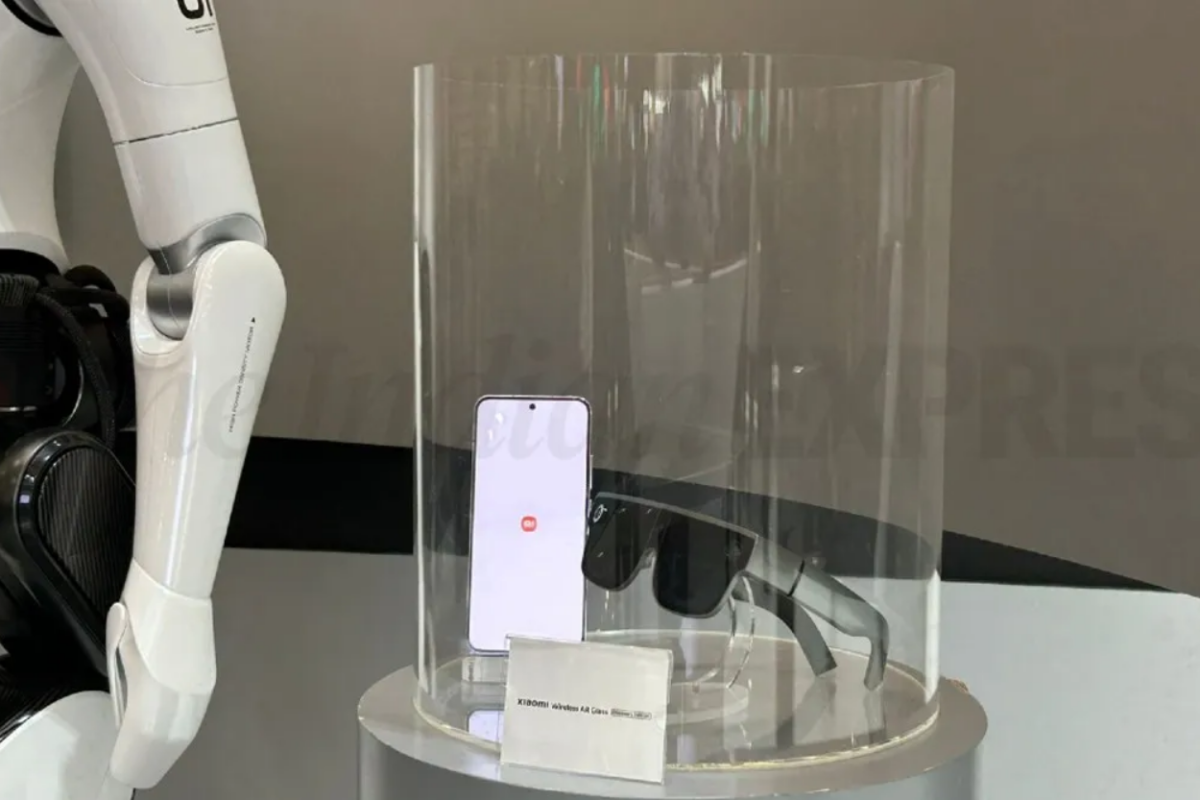
The spotlight at MWC 2023 was on Xiaomi’s flagship smartphone equipped with a Leica lens, but the Chinese tech giant also showcased other noteworthy products. Among the most talked-about products was the Xiaomi Wireless AR Glass Discovery Edition, a prototype wearable designed to blend digital content with the physical environment through a lightweight, completely wireless design. The device highlighted Xiaomi’s growing interest in augmented reality and its vision for future human-device interaction.
Unlike conventional virtual reality headsets that completely isolate users from their surroundings, Xiaomi’s AR glasses are designed to overlay digital information onto the real world. One of the standout features is the use of electrochromic lenses, which can instantly switch between transparent and darkened modes. This enables users to alternate between an immersive augmented reality experience and a clear view of their surroundings without attaching or removing external accessories.
The Wireless AR Glass Discovery Edition weighs approximately 126 grams, making it significantly lighter than many existing mixed-reality headsets. Xiaomi achieved the reduced weight by using lightweight materials such as magnesium-lithium alloy and carbon fiber, allowing the glasses to remain comfortable during extended periods of use. The balanced frame also distributes weight evenly, reducing pressure around the nose and ears.
Powering the wearable is Qualcomm’s Snapdragon XR2 Gen 1 platform, a processor developed specifically for augmented and virtual reality applications. The glasses feature dual Micro-OLED displays capable of reaching brightness levels of up to 1,200 nits while delivering what Xiaomi describes as a “retina-level” visual experience. The display achieves a pixel density close to the threshold where individual pixels become nearly impossible for the human eye to distinguish, resulting in sharper graphics and improved text readability.
Instead of relying on a wired connection to a computer or processing unit, the glasses communicate wirelessly with compatible smartphones. Xiaomi demonstrated pairing through NFC, allowing users to connect the device simply by bringing it close to a supported handset. The company also reported end-to-end latency of approximately 50 milliseconds, helping virtual objects remain synchronized with real-world movement during interaction.
Interaction is based on gesture recognition rather than handheld controllers. Cameras and onboard sensors track hand movements, enabling users to select applications, manipulate virtual objects, navigate menus, and control compatible smart home devices using natural gestures. During demonstrations, digital windows could be resized, moved around the user’s field of view, and anchored to physical locations within a room, illustrating potential applications in productivity, entertainment, and connected home environments.
Navigation overlays can provide turn-by-turn directions while allowing users to maintain awareness of traffic and pedestrians. Messaging notifications, calendar reminders, weather updates, and translation tools can appear within the user’s field of vision without requiring them to pick up a smartphone. For media consumption, the glasses create the impression of a large virtual display that can be used for watching videos or viewing photos while occupying minimal physical space.
Although the Wireless AR Glass Discovery Edition remains a concept device rather than a commercial product, it reflects the broader direction of consumer electronics manufacturers exploring augmented reality as a future computing platform. By combining lightweight construction, wireless connectivity, advanced displays, and intuitive gesture controls, Xiaomi demonstrated technologies that could eventually shape the next generation of wearable computing devices and expand the role of augmented reality in everyday digital experiences.